Introduction
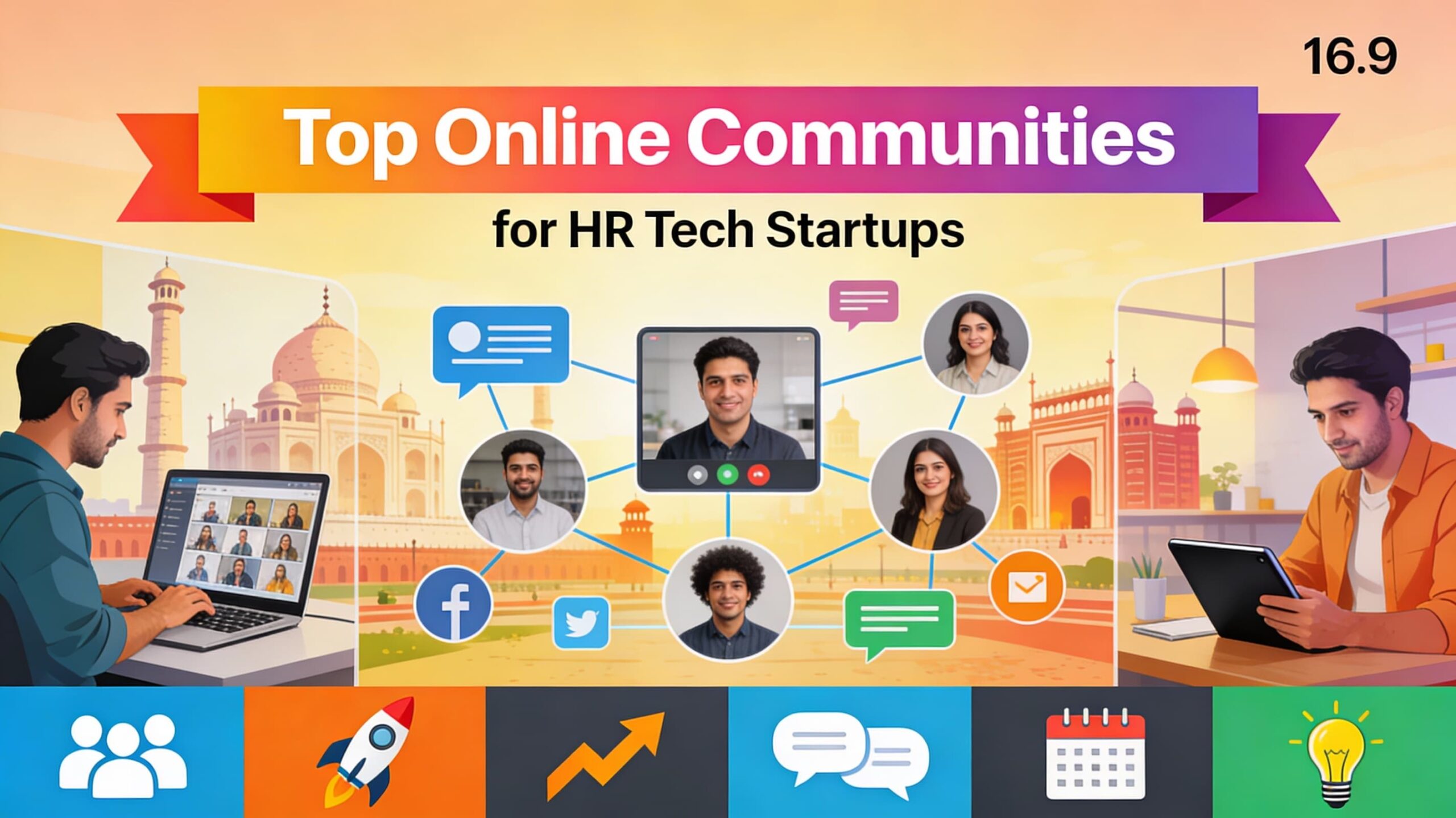
Finding the right online community for your HR tech startup can mean the difference between struggling in isolation and accelerating toward product-market fit with experienced mentors at your side. HR tech startup communities are digital gathering spaces—Slack groups, forums, LinkedIn networks, and specialized platforms—where founders, HR professionals, and investors exchange ideas about recruitment technology, employee engagement platforms, and workforce analytics tools.
This guide covers online communities specifically built for HR technology startups, from seed-stage founders building their first ATS to Series B teams scaling globally. If you’re an HR tech entrepreneur seeking product feedback, a talent acquisition professional exploring startup partnerships, or an investor scouting the space, you’ll find actionable community recommendations here. We exclude general business networks and focus exclusively on communities where HR tech discussions drive meaningful connections.
The direct answer: The top online communities for HR tech startups in 2026 include StartupExperts (2,000+ members with 10,000 monthly posts), the Y Combinator alumni network (backing Deel, Rippling, and 20+ HR tech companies), GrowthHackers (relaunched with AI-focused growth strategies), and platform-specific groups like Hacking HR and specialized Slack communities where HR leaders gather daily.
By reading this guide, you will:
- Discover which communities drive real funding connections and partnership opportunities
- Learn evaluation criteria for selecting communities aligned with your startup stage
- Access expert-validated strategies for standing out in communities with thousands of members
- Understand how successful HR tech startups like Deel ($679M funding) leveraged community networks
- Build a personalized community engagement plan that respects your time constraints
Understanding HR Tech Startup Communities
HR tech startup communities are specialized professional networks where founders building human resources technology—from applicant tracking systems to performance management software—connect with peers, investors, and industry experts. Unlike general startup forums, these communities focus on the unique challenges of the HR tech space: compliance complexities across 150+ countries, integration requirements with legacy HRIS systems, and the long sales cycles typical of enterprise HR software.
Their value proposition for founders, developers, marketers, and investors is distinct: access to HR professionals who become beta testers, connections with talent acquisition professionals who understand buyer pain points, and industry experts who’ve scaled similar products through the compliance minefields of global employment law.
Types of HR Tech Communities
Founder-focused networks prioritize strategic discussions among HR tech entrepreneurs. These communities host conversations about fundraising strategies, product pivots, and leadership development. Members participate in private channels discussing term sheets, board dynamics, and exit strategies—conversations too sensitive for public forums.
Product development groups serve technical teams seeking user feedback and integration partnerships. Here, people operations professionals and developers exchange knowledge about API architectures, data privacy requirements, and the practical solutions that helped them achieve SOC 2 compliance faster.
Investor and funding-focused communities connect HR tech founders with angel investors and venture capitalists specializing in the space. AngelList syndicates and VC-backed networks offer deal flow visibility that accelerates fundraising timelines.
Industry-specific groups drill into niche HR tech verticals. Talent management communities differ substantially from payroll compliance groups, and dedicated channels for recruiting technology attract different member demographics than employee engagement platform founders.
Key Characteristics of Effective Communities
Active member engagement separates valuable communities from digital ghost towns. The most effective communities generate thousands of monthly posts where senior HR professionals share real implementation challenges, not just promotional content. StartupExperts demonstrates this with 10,000+ monthly posts across 30 channels—roughly 300 substantive discussions daily.
Quality of connections matters more than raw member counts. Communities where industry leaders, successful HR tech founders, and active investors participate regularly deliver more value than passive networks of 50,000 lurkers. Look for communities where thought leaders with exits or major funding rounds actively respond to questions.
Resource accessibility including templates, case studies, and market research accelerates learning curves. The best communities offer member-only resources—pitch deck templates, compliance checklists, and HR tech landscape reports—that would cost thousands from consulting firms.
Geographic relevance connects founders with regional opportunities. With 55 HR tech startups concentrated in California alone and emerging hubs in Berlin, London, and Singapore, communities with strong local events presence enable face-to-face relationship building that converts to partnerships.
These characteristics form the foundation for evaluating which communities deserve your limited time—a framework we’ll apply to specific recommendations in the next section.
Top 10 Online Communities for HR Tech Startups
We evaluated communities across five criteria: member activity levels (posts per month), quality of connections (presence of funded founders and investors), HR tech focus (percentage of discussions specifically addressing HR technology), resource depth (templates, research, expert access), and entry accessibility. Here are the communities that consistently ranked highest.
Global Communities
StartupExperts operates as a Slack-based global network with nearly 2,000 members across 30+ specialized channels. With 10,000 monthly posts, it’s among the most active communities where HR professionals connect specifically around startup challenges. According to Aurora Financials’ 2025 community analysis, StartupExperts opens “doors to clients” for consultants and founders alike. Dedicated channels cover payroll compliance, global contractor hiring, and HR technology tool reviews. Access requires application approval, maintaining community quality.

GrowthHackers relaunched in 2025 through a partnership with GrowthRocks, pivoting toward AI-enhanced growth strategies. Since 2013, the platform has built expertise in user acquisition tactics—directly applicable to HR tech startups navigating competitive SaaS markets. Their 2025 AI certification programs align with HR tech trends toward predictive analytics and machine learning-powered talent acquisition. The community serves founders focused on scaling rather than early-stage product validation.
Product Hunt HR Tech functions as both launch platform and ongoing community. HR tech products launching here gain visibility through daily upvotes that drive beta user acquisition. Beyond launches, the platform’s discussion forums enable continuous learning about what features resonate with HR leaders and which positioning strategies cut through marketplace noise.
Hacking HR Innovation Hub brings together HR executives and technologists exploring workplace innovation. The community emphasizes employee experience transformation and people ops professionals navigating digital change. Regular virtual events and expert-led discussions provide valuable insights into enterprise buyer priorities—intelligence that helps HR tech startups refine their value propositions.
Platform-Specific Communities
LinkedIn HR Tech Startup Groups concentrate significant professional community activity. The “HR Technology Network” group (45,000+ members) features daily discussions on industry trends and vendor evaluations. “People Analytics Leaders” (28,000 members) attracts data-focused HR tech founders building workforce analytics platforms. “Talent Acquisition Innovation” (35,000 members) serves recruiting technology startups with discussions on candidate experience strategies and sourcing tips.
Slack Communities represent where many substantive HR tech discussions happen daily. Three stand out:
- Secret HR Society hosts senior HR professionals in candid technology adoption discussions away from LinkedIn’s public visibility
- People Ops Hub connects people operations professionals implementing HR tech stacks at growing companies
- Talent Community Network attracts talent professionals evaluating recruiting technologies, offering direct access to buyer perspectives
Invitation processes for these best Slack communities typically require referral from existing members or verification of relevant professional background.
Discord and Reddit show emerging HR tech startup presence. The r/hrtech subreddit hosts frank discussions about vendor experiences that rarely surface on professional networks. Discord servers around future-of-work topics attract younger HR tech founders building products for distributed teams. While smaller than established platforms, these communities offer less saturated networking opportunities.
Specialized Focus Communities
Funding and Investment Groups like AngelList syndicates specializing in HR tech provide direct investor access. Several VCs—including Andreessen Horowitz, which backed Deel’s funding rounds—maintain community presence where founders can build relationships before formal fundraising. Y Combinator’s ecosystem, while not a pure community forum, functions as an elite network: 20+ HR tech alumni companies share demo day experiences and investment strategies through alumni Slack channels.
Technical Development Communities serve engineering teams building integrations. API partnership forums specific to HR tech—particularly around HRIS integrations—enable faster technical development. Communities around compliance-as-code and multi-country payroll implementation attract specialized expertise difficult to find elsewhere.
Women in HR Tech and diversity-focused networks address underrepresentation in both HR technology entrepreneurship and venture funding. These communities provide mentorship programs, pitch practice, and investor introductions specifically designed to expand professional circles for underrepresented founders.
Evaluation Framework: How to Choose the Right Community
Strategic community selection prevents the scattered engagement that burns time without generating results. Before joining every community listed above, assess fit through structured criteria.
Assessment Criteria
Member quality and startup stage alignment determines whether conversations match your current challenges. Seed-stage founders discussing MVP validation won’t benefit from Series C growth strategy discussions—and vice versa. Investigate member profiles before investing time: what funding stages do active participants represent? Do HR professionals in the community match your target buyer persona?
Activity level and response rates indicate whether questions receive answers. Communities with high post counts but low engagement per thread suggest broadcast behavior rather than genuine knowledge exchange. Monitor how quickly substantive questions receive thoughtful responses—48+ hours of silence on reasonable questions signals declining community health.
Resource availability and knowledge base depth differentiates communities offering real value from networking-only spaces. Some communities maintain searchable archives of past discussions, curated templates, and recorded expert sessions. These valuable resources compound over time, making community membership increasingly valuable for career development and company building.
Geographic focus and market relevance matters particularly for HR tech startups targeting specific regions. A community strong in U.S. HR tech but weak on EU compliance knowledge won’t serve founders building for the European market. Consider where community members operate and whether local events exist in your target markets.
Community Comparison Matrix
| Community | Member Count | HR Tech Focus | Activity Level | Cost | Application Process |
|---|---|---|---|---|---|
| StartupExperts | ~2,000 | High | 10k posts/month | Free | Application |
| Y Combinator Network | 5,000+ alumni | Medium-High | Moderate | YC acceptance | Competitive |
| GrowthHackers | 50,000+ | Medium | High | Free + Paid tiers | Open |
| Hacking HR | 30,000+ | High | Moderate | Free + Premium | Open |
| Secret HR Society (Slack) | 3,000+ | High | High | Free | Referral required |
Startup stage guidance: Pre-seed founders benefit most from Indie Hackers and Product Hunt communities where bootstrapped HR tech discussion thrives. Seed to Series A companies extract value from StartupExperts and Hacking HR. Series B+ startups with YC backing access exclusive alumni networks that accelerate partnership and acquisition conversations.
Getting Maximum Value from Communities
Best practices for introductions separate members who gain access to opportunities from those who remain invisible. Lead with specific expertise you can offer, not asks. “I built an ATS serving healthcare staffing—happy to share our compliance approach for HIPAA-adjacent hiring” attracts interest; “Looking for connections and advice” disappears into the noise.
Content sharing strategies that build thought leadership focus on original insights rather than recycled blog posts. Share knowledge from your unique experience—what you learned integrating with 15 different HRIS platforms, or why your pricing experiment increased conversion 40%. HR leaders value practical solutions over theoretical frameworks.
Networking approaches leading to partnerships and funding prioritize relationship-building before requests. Comment thoughtfully on others’ posts for weeks before asking for introductions. When founders eventually pursue funding connections, they’ve established credibility that prompts warm referrals rather than ignored cold messages.
Giving back through mentorship and knowledge sharing creates the reciprocity that sustains communities. Successful HR tech founders report that answering questions for earlier-stage entrepreneurs generated unexpected opportunities—investor introductions from grateful recipients, acquisition interest from observers, and partnership proposals from complementary products.
Common Challenges and Solutions in HR Tech Startup Communities
Even with the right community selected, obstacles emerge. Here’s how successful HR tech founders navigate typical challenges.
Breaking Through the Noise
Communities with 10,000+ monthly posts create discovery problems—valuable contributions disappear within hours. Strategies for standing out:
Timing matters: Post during peak activity windows (typically 9-11 AM in the community’s primary timezone) when engaged members are actively browsing. Early engagement triggers algorithmic visibility on platforms that surface trending discussions.
Specificity attracts: Generic questions like “What’s the best approach to enterprise sales?” generate generic responses. “We’re seeing 60-day sales cycles at $15K ACV—anyone successfully shortened cycles for compliance-focused HR software?” attracts precise, valuable insights.
Consistent presence compounds: Members who contribute valuable insights weekly become recognized names. When they eventually share announcements or seek help, accumulated goodwill drives response rates that newcomers can’t match.
Finding the Right Connections
Techniques for identifying potential mentors, partners, and investors:
Study contribution patterns before reaching out. Community members who regularly share knowledge about your specific challenge—say, global payroll compliance—likely have relevant expertise and demonstrated willingness to help.
Engage publicly first. Comment thoughtfully on their posts several times before sending private messages. This establishes context and demonstrates you’re not mass-messaging every visible member.
Build authentic relationships beyond transactional networking. Ask about their challenges, not just your needs. Founders who helped others navigate compliance decisions later discovered those relationships converted to investor introductions, enterprise customer referrals, and acquisition discussions.
Avoiding Community Fatigue
Multiple active communities quickly overwhelm founder bandwidth. Time management strategies:
Select two primary communities for deep engagement and treat others as occasional resources. Attempting active participation in five+ communities dilutes presence everywhere without building meaningful connections anywhere.
Batch community time into specific windows—perhaps 30 minutes each morning—rather than allowing notifications to fragment deep work throughout the day.
Quality over quantity applies to responses too. One thoughtful, detailed answer to a question aligned with your expertise builds more reputation than dozens of surface-level comments across unrelated threads.
Success Stories and Expert Insights
Abstract community benefits become concrete through specific examples of HR tech startups that leveraged networks for measurable outcomes.
Deel’s path to $679M in funding demonstrates Y Combinator network value. Founders tapped YC alumni connections for introductions to Andreessen Horowitz, accessing investor relationships that would have taken years to build independently. The YC ecosystem’s concentrated HR tech expertise—with companies like Rippling, Checkr, and Gusto sharing hard-won insights—accelerated Deel’s expansion to 150-country coverage. Their 4.9/5 Glassdoor leadership rating reflects talent practices refined through community knowledge exchange.

Gloat’s $192.6M for AI talent marketplace shows how community-driven product validation shapes investor interest. Before major funding rounds, Gloat’s team participated actively in HR tech communities where HR executives discussed internal mobility challenges. Real conversations with senior HR professionals shaped their AI approach, creating case studies and testimonials that de-risked investor due diligence.
Industry experts weigh in on community value:
Marcus Chen, former VP of Product at a top-10 HR tech company: “The communities where I actually learned were smaller and focused. StartupExperts’ payroll channel taught me more about global compliance than six months of consultant calls.”
Dr. Sarah Williams, HR Tech Conference advisory board member: “2025’s most innovative HR tech products came from founders deeply embedded in professional communities. They built what HR leaders actually described needing, not what they assumed from outside.”
Investment analyst perspective from Wellfound’s 2025 report: “We track community engagement as an investment signal. Founders who’ve built reputation in HR tech communities pre-raise typically close rounds 40% faster than those starting cold outreach.”
These success stories share a pattern: founders invested in communities for months before expecting returns, contributed genuine expertise rather than seeking extraction, and built relationships that converted to opportunities only after establishing trust.
Conclusion and Action Steps
The top online communities for HR tech startups—StartupExperts, Y Combinator’s alumni network, GrowthHackers, Hacking HR, and specialized Slack groups—offer founders access to networks that accelerate everything from product development to fundraising. The communities that deliver results share common characteristics: active member engagement, high-quality connections including investors and successful founders, accessible resources, and geographic relevance for your target markets.
Success in these communities requires strategic selection based on your startup stage, consistent contribution over time, and authentic relationship-building before transactional requests.
Your five immediate action steps:
- Today: Request access to StartupExperts via their application form and join one LinkedIn HR Tech group matching your target market
- This week: Introduce yourself in one community with specific expertise you can offer, not requests for help
- This month: Contribute three substantive responses to questions aligned with your knowledge, building visible expertise
- Ongoing: Schedule 30 minutes daily for focused community engagement, prioritizing two communities for deep investment
- Before fundraising: Build at least five genuine relationships with community members who have investor connections
Disclaimer: Community effectiveness varies based on individual engagement quality, startup stage fit, and timing. Membership in these communities doesn’t guarantee funding or partnership outcomes. Verify current community policies and membership requirements before applying.
Beyond startup communities, explore building customer advisory boards to formalize buyer relationships, and internal company communities to retain talent as you scale. HR Tech Conference 2025 and similar industry events offer in-person extensions of online community relationships.
Additional Resources
Community Access:
- StartupExperts application
- GrowthHackers registration
- Y Combinator application (for program consideration)
HR Tech Startup Intelligence:
- Wellfound HR Tech Startup Index (funding data on 100+ companies)
- F6S HR Tech Directory (55+ California-based startups profiled)
- HR Tech Conference 2025 innovation showcase calendar
Templates and Tools:
- Community introduction template for Slack-based HR tech groups
- Partnership proposal framework for integration discussions
- Investor outreach tracking spreadsheet for community-sourced connections
Upcoming Events:
- HR Tech Conference 2025 (September, Las Vegas)
- Regional Hacking HR meetups (monthly, multiple cities)
- StartupExperts virtual pitch practice sessions (bi-weekly)